The Wawel Dragon

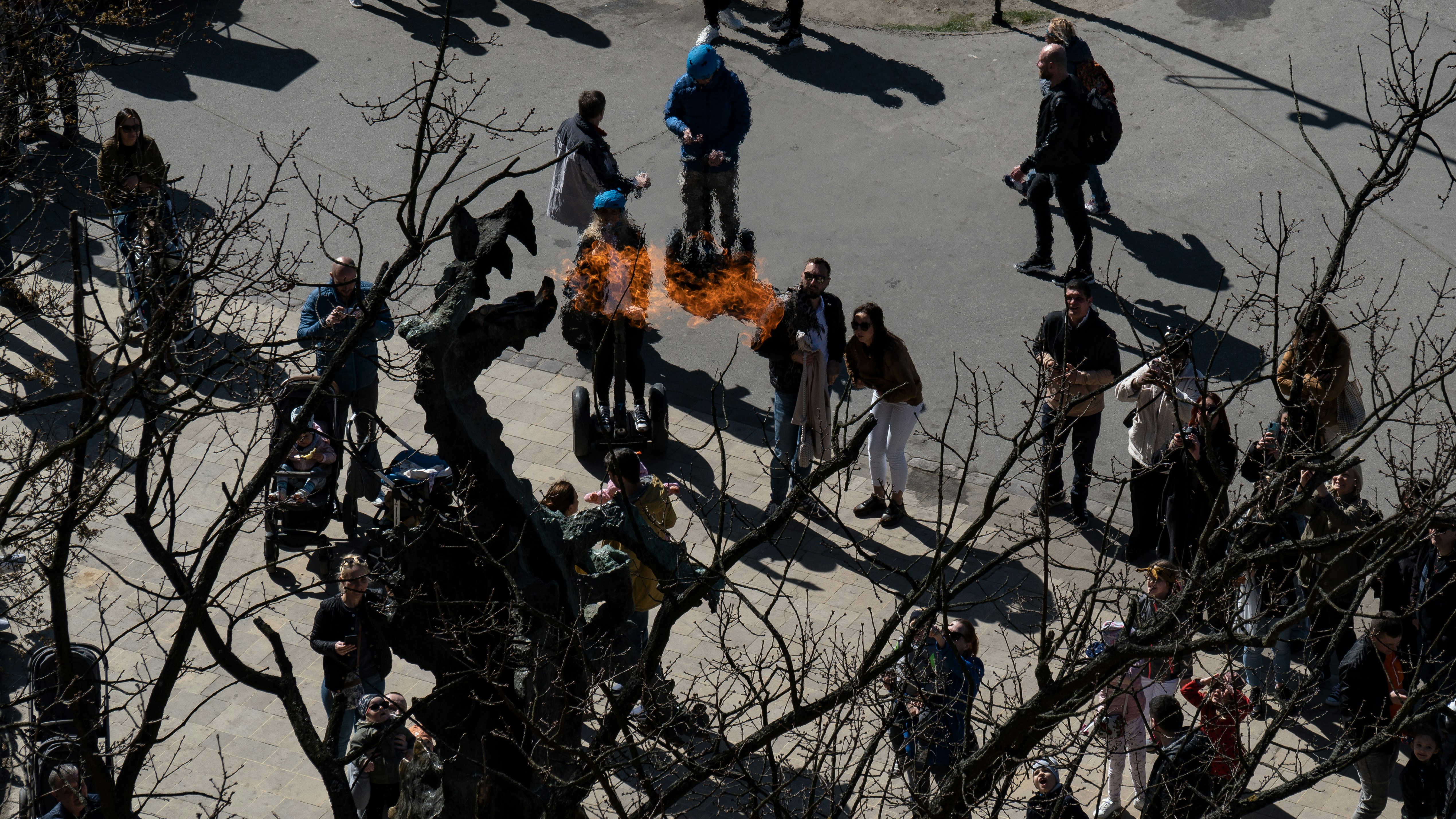
Krakow's oldest tale dates back at least to the 13th century, when it was included in a Polish chronicle. Legend has it that Smok Wawelski, the Wawel Dragon, roamed the area's villages, eating anything that moved and destroying the king's land. This beastly monster preyed on livestock, and when there were no sheep left to eat, devoured villagers (some sources insist that it only devoured virgins). Hoping to save the people of Wawel from the dragon, the King offered his own daughter up as a prize to any knight who could slay the dragon. This offer was to no avail, every knight who attempted to kill the dragon was either eaten or instantly turned into ash by a ball of fire. Until one day, a humble shoemaker named Skuba came along. He decided to slit his own sheep in half. He stuffed the sheep with flammable sulphur, sewed its stomach back up, and fed it to the dragon. The dragon immediately ran to the Vistula River to extinguish the burning meal, but it drank so much water that its stomach exploded into tiny pieces. The city of Wawel was saved from the dragon and Skuba became the people's new hero. Skuba married the king's daughter and became a prince.
Today, you can see a statue of the dragon just below Wawel Hill, by the river. Every four minutes, flames shoot from its mouth.
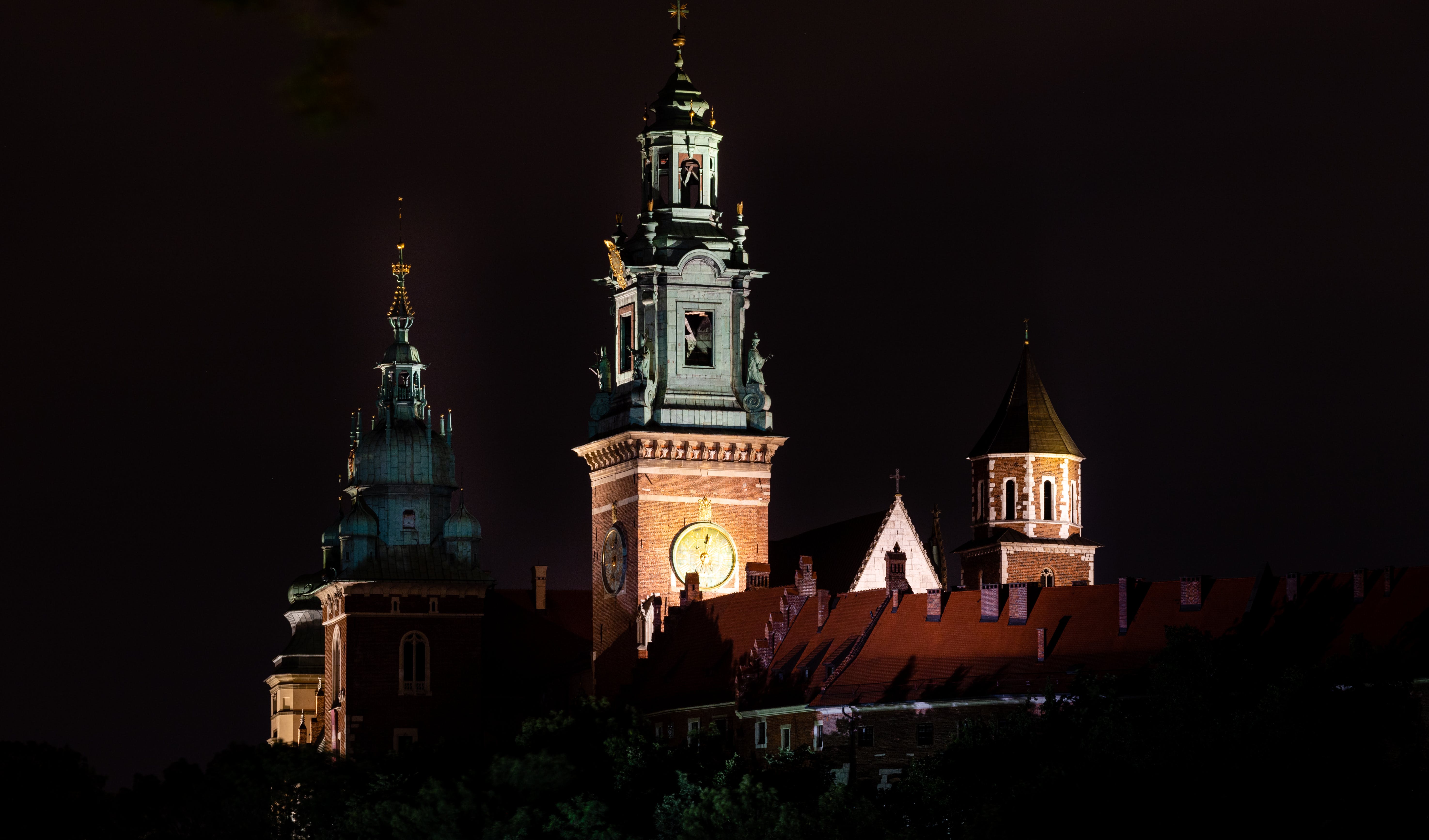
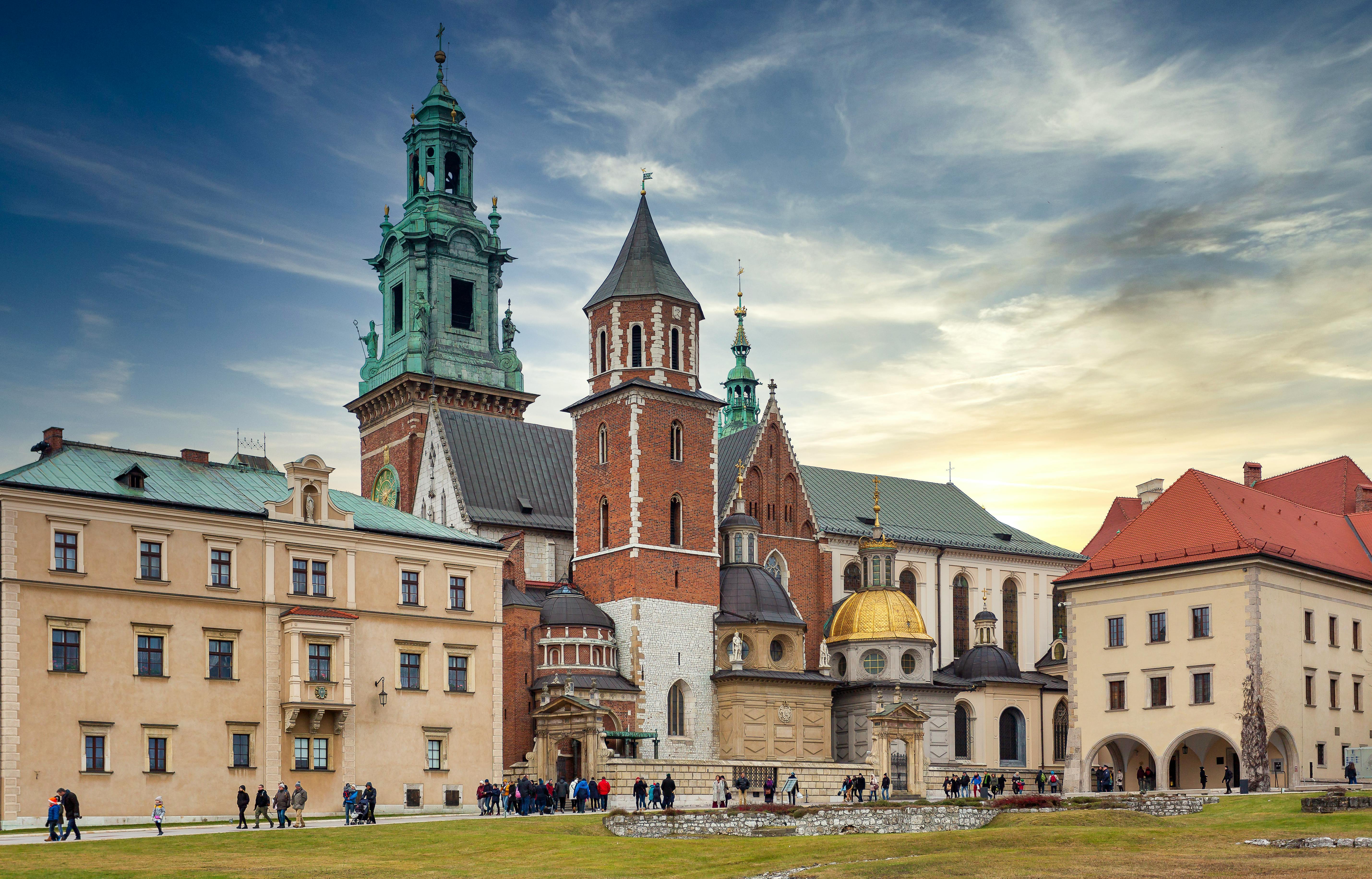
One of the most impressive rooms of Wawel Royal Castle is the Envoys' Room, due to its interesting ceiling with the sculptures of tiny heads. These are portraits of nobility and burghers. Sculptures symbolise the openness of Polish Kings to the daily problems of all people. It is no coincidence because in the Envoys' Room, audiences and trials took place. However, one of the heads does not match the others, because its mouth is gaged.
The legend dated back to King Sigismund August's times says: one of the merchants in the Krakow Cloth Hall sold beautifully decorated belts. Unfortunately, a thief showed up and stole one of them. He was noticed, and people in the crowd started to scream: "catch the thief!". The villain, feeling that he would not run away, decided to stealthily throw away the item. A poor widow noticed the belt on the ground. No sooner had she picked it up, and started to look for the owner than she was caught and accused of theft. The explanations were useless, and the woman was brought to the King. That day, the Monarch was extremely tired. He listened only to the crowd, and he did not even allow the woman to speak - she had been caught with a stolen item, so the fault seemed to be obvious. She got a prison sentence. The desperate woman shouted: "If no one wants to stand up for me, let those wooden heads speak at least!". Suddenly, silence fell over the room. One of the heads came to life and said: “Rex Auguste, iudica iuste” (Latin: judge fairly, King Augustus) then fell silent again. Although the King was offended by the questioning of his sentence, he sent his people to the market to investigate the matter. The king's envoys quickly found many witnesses who testified that they saw the man throw the belt away. The case was discontinued, but the king ordered to gag the talking head so that no one would ever interfere with his judgement again.
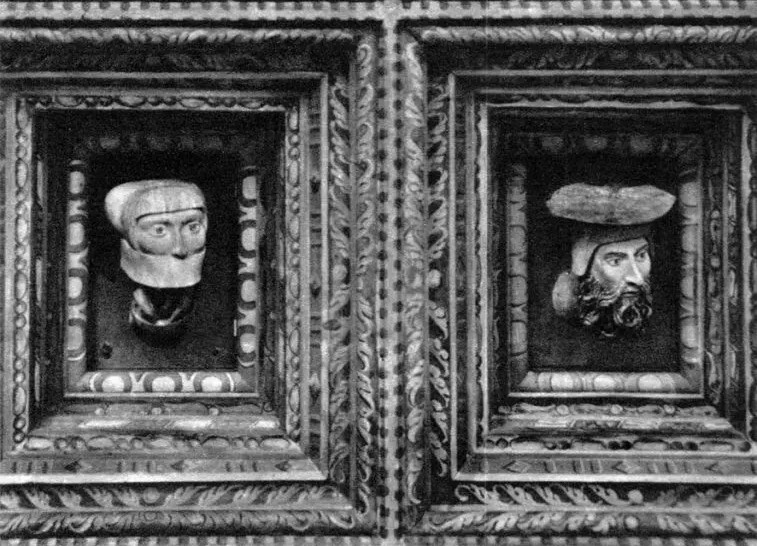
A Talking Head
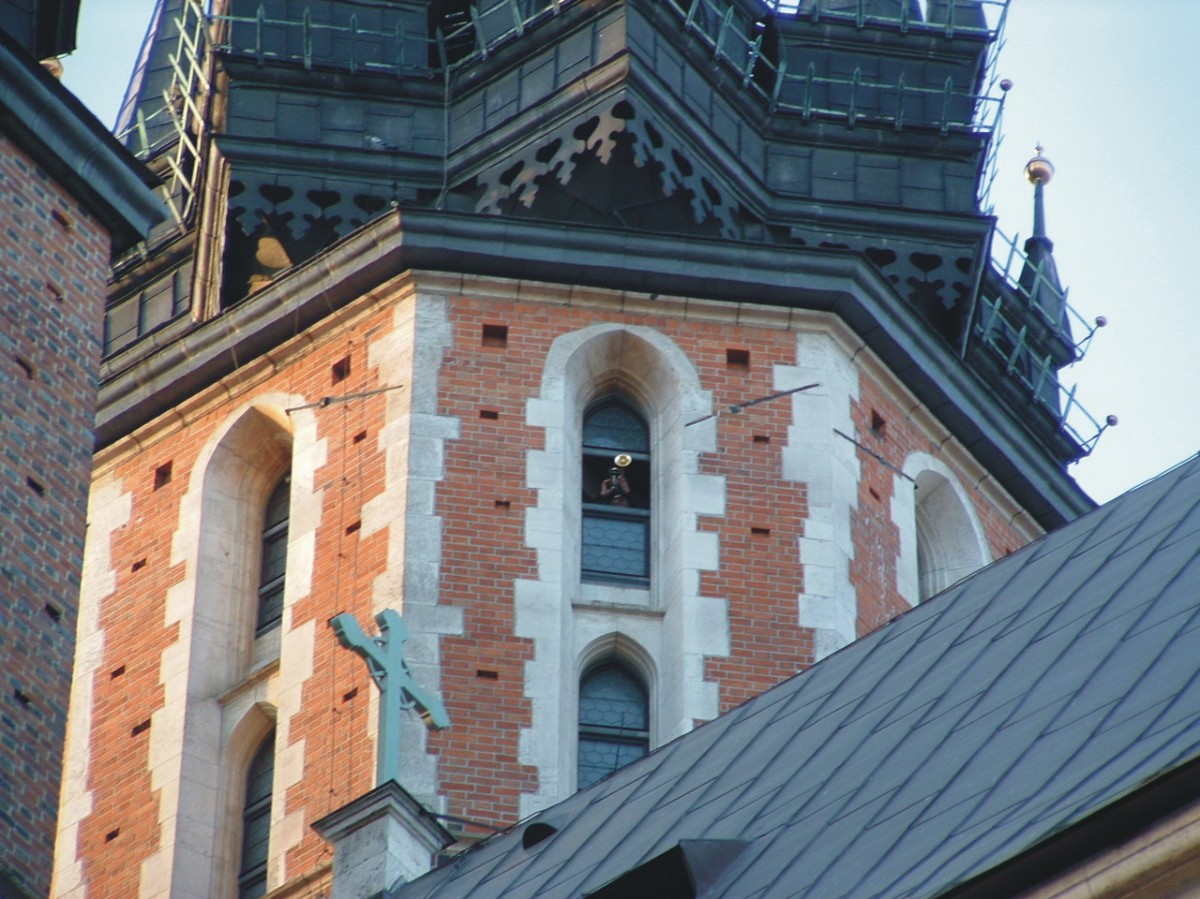
The Trumpeter of St. Mary's Basilica
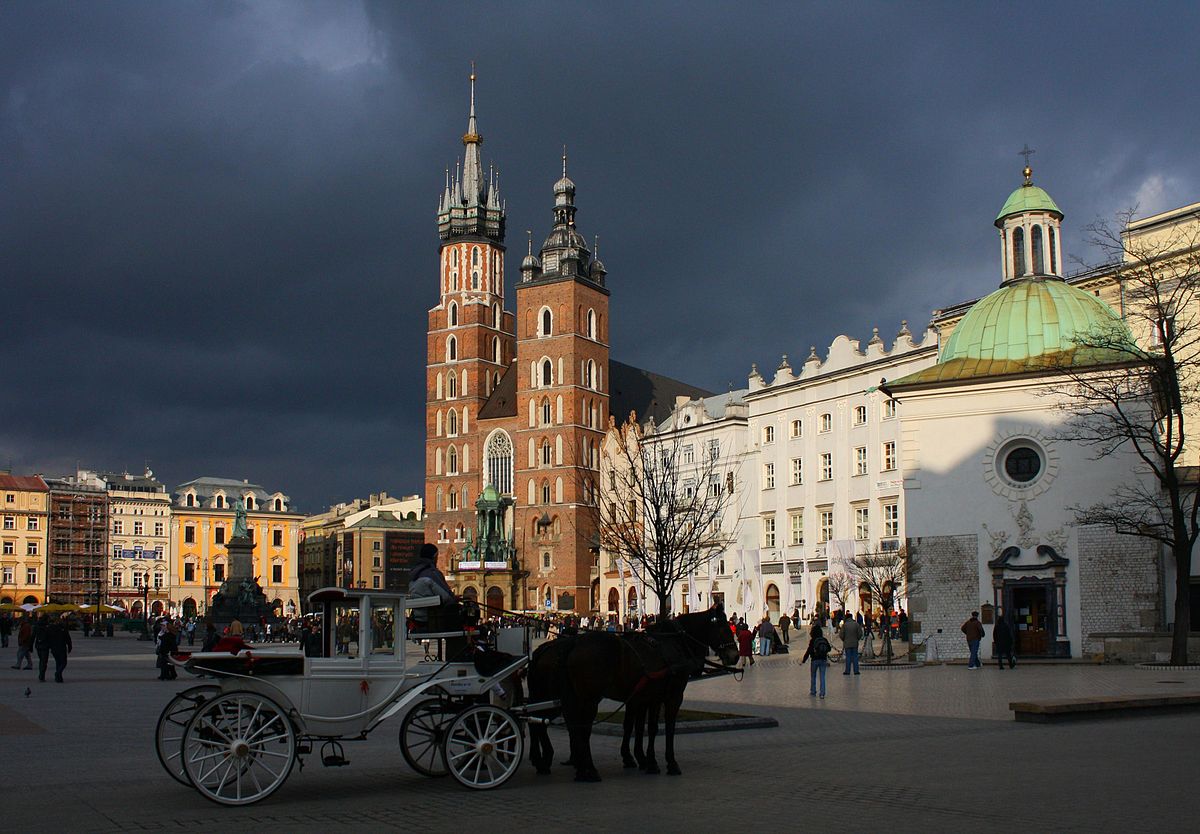
Krakow is surrounded by 150 churches, many of them designed in a unique Polish gothic style, including St. Mary's Basilica, which you can find on Rynek Główny, the main square. In the 13th century, when the Mongols attacked Krakow, a watchman appeared from the window of the original basilica to sound the alarm, warning the town of invasion with a specific melody called hejnal. Sadly, before the watchman could finish his song, he was shot in the throat by an arrow. Today, every hour from the top window of the church's south tower, a trumpeter appears, playing the same melody to the four corners of the world. But don't expect to hear the full song. The trumpeter stops the song just short of the ending, as a symbol of the legend and victim. Now when you visit the basilica you will know why the trumpeter ends their performance so abruptly.
Looking at St. Mary's two towers you might wonder why the towers are different heights. The current church was built in the 14th century, after the original was destroyed by Mongol invaders. For its construction, King Boleslaus decided to hire two brothers to build two towers, one on each side. The older brother built the south tower and the younger brother built the north tower. When the younger brother noticed that the south tower was taller and better than his, he became enraged with jealousy. He stabbed and killed his older sibling with a knife so that he could no longer build a better tower. The next day, he was consumed with so much guilt and remorse for killing his own brother, that he jumped from the tower to his death. Today, the murderer's knife can be seen hanging in Rynek Główny's Cloth Hall.

The Two Brothers
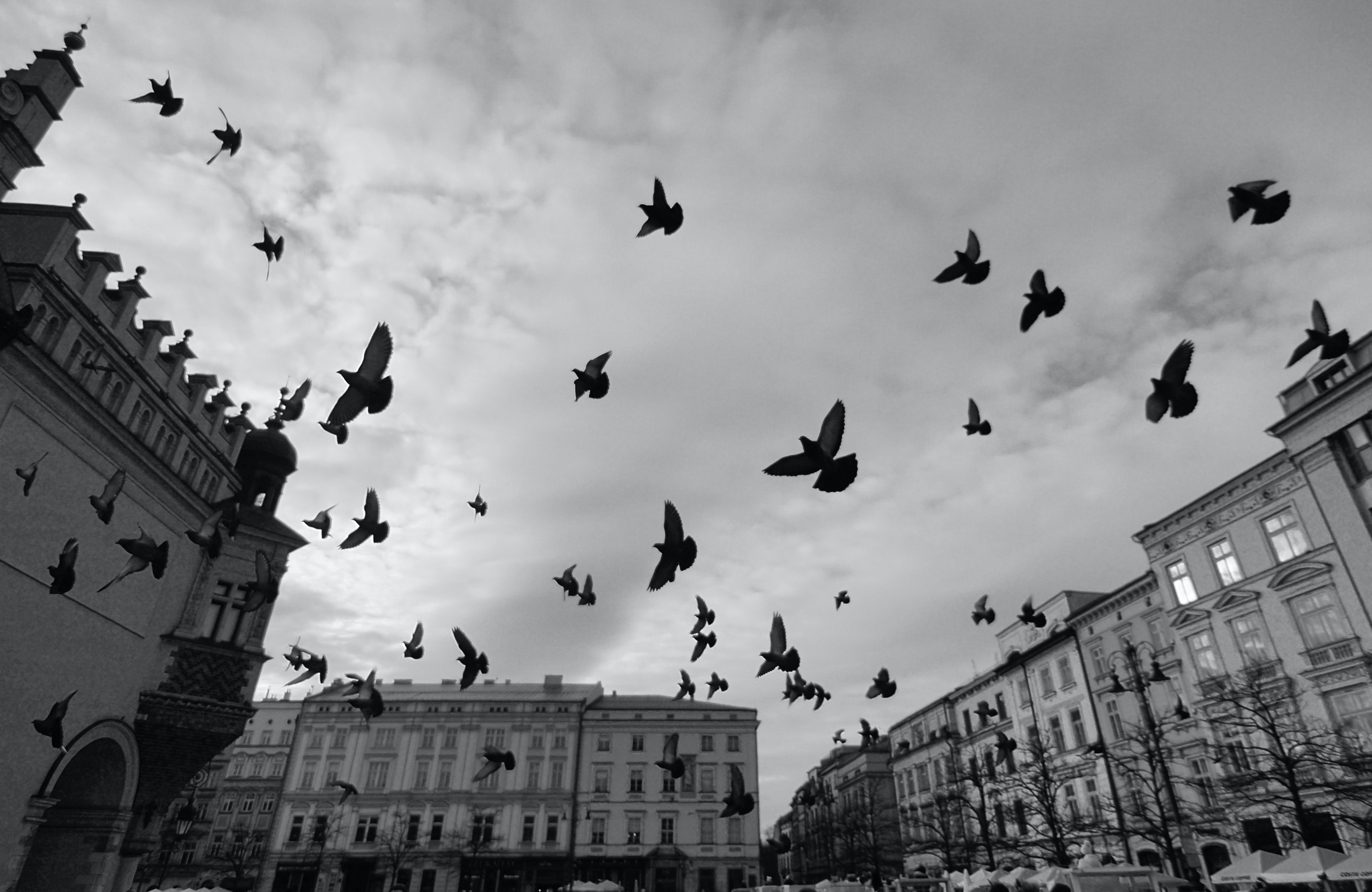
The Enchanted Pigeons
The pigeons, flocks of whom fill up Krakow's Main Market Square, are no ordinary birds. Once upon a time, they were placed under a spell. This legend holds that the pigeons of Kraków are enchanted. When the Kraków throne was assumed by Prince Henryk IV Probus in the 13th century, the Piast monarch greatly desired to unite all the Polish lands and crown himself king. Yet he had no money. A witch came and offered him assistance: she transmuted the Prince's warriors into pigeons. They flew up to St Mary's Church and began to peck out little pebbles which, falling to the ground, were turning into gold coins. The Prince collected the gold and went to Rome to acquire the Pope's support in obtaining the Crown. Yet on his way he indulged in feasting, merrymaking, and… lost all the money. He never reached Rome and he never returned to Kraków again either, while his retainers remain enchanted and still waiting for their Prince...